Manual of Resources for Aboriginal & Torres Strait Islander Suicide Prevention

Clinicians & Front Line Workers

Indigenous Suicide Prevention Activity Evaluation Framework

This evaluation framework is based on the principles described in the Aboriginal and Torres Strait Islander Suicide Prevention Evaluation Project (ATSISPEP).
It is designed to evaluate suicide prevention activities that are already underway, and to provide guidance around evaluation while in the planning stages.
Note: This 2017 resource is under review

Source: Centre of Best Practice in Aboriginal and Torres Strait Islander Suicide Prevention

Indigenous Suicide Prevention Activity Assessment Tool

This planning tool is based on the principles described in the Aboriginal and Torres Strait Islander Suicide Prevention Evaluation Project (ATSISPEP).
It shows how communities can plan and lead suicide prevention projects, using essential criteria for success.
Note: This 2017 resource is under review

Source: Centre of Best Practice in Aboriginal and Torres Strait Islander Suicide Prevention

Stolen Generations Resource Kit for Teachers and Students

Resources for teaching Indigenous and non-Indigenous students from kindergarten to Year 9 about the Stolen Generations and the continuing consequences of colonisation and intergenerational trauma, including:

Video interviews with Stolen Generations survivors
Lesson plans
A home learning kit for students to work with their families
Posters and visuals
Source: Healing Foundation

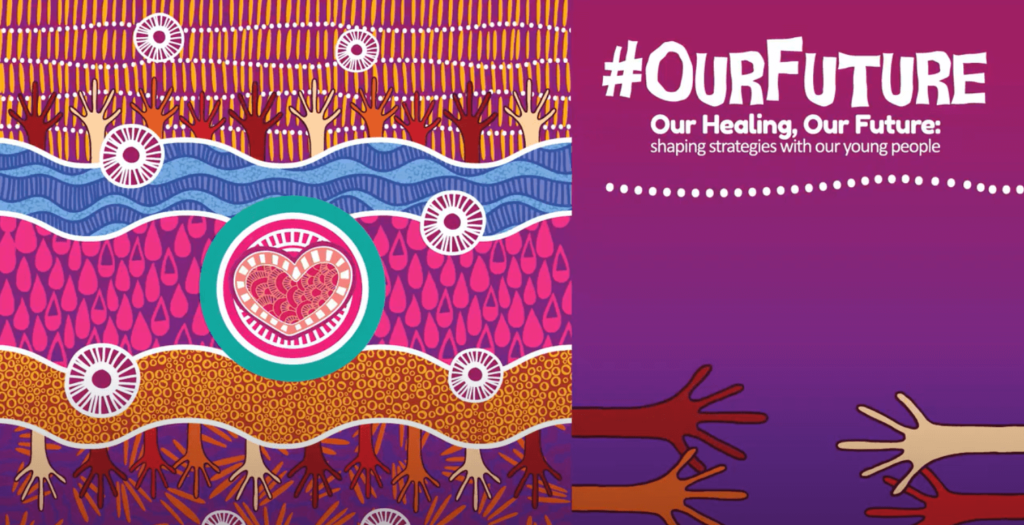
Our Healing, Our Future, shaping strategies with our young people

This 1.5 hour webinar brought together young people and experts to discuss lived experience of Intergenerational Trauma and strategies for creating positive intergenerational change. Speakers include:

Professor Helen Milroy, a leader in Indigenous mental health and trauma
Tonii Skeen, youth advocate
Karlie Stewart, youth advocate
· Joel Wenitong, community mentor

Yajilarra nhingi, mindija warrma (from dreams, let’s make it reality)

Wiyi Yani U Thangani (Women’s Voices) project builds on the legacy of the 1986 Women’s Business Report.

The Australian Human Rights Commission (the ‘Commission’) and the National Indigenous Australians Agency (NIAA) have partnered on a national conversation to elevate the voices of Aboriginal Torres Strait Islander women and girls.

Led by the Aboriginal and Torres Strait Islander Social Justice Commissioner, June Oscar AO, Wiyi Yani U Thagani (Women’s Voices) is a multi-year initiative set out to capture what Aboriginal and Torres Strait Islander women and girls consider to be their strengths, challenges and aspirations for change.

Throughout 2018, the Commissioner and her team travelled to 50 locations in urban, regional and remote areas across every state and territory. They conducted 106 engagements and met with 2,294 women of all ages. Over 100 submissions and 300 survey responses were also received.

Informed by the findings from engagements and submissions, the Wiyi Yani U Thangani (Women’s Voices): Securing our Rights, Securing our Future 2020 report was prepared, and published in December 2020. The report is an extensive whole-of-life report that captures the needs of Aboriginal and Torres Strait Islander women and girls, the principles they think ought to be enshrined in the design of policy and programs, and the measures they recommend ought to be taken to effectively promote the enjoyment of their human rights in the future.

Scroll to Top